HomeCategoryAnalysisFinancing the future of elderly care in Germany: Carestone CEO Daniel Ahrendt...

Financing the future of elderly care in Germany: Carestone CEO Daniel Ahrendt talks market dynamics and growth

-
Germany-based real estate platform Carestone specialises in the development, construction and sale of senior living and care home assets. Headquartered in Hanover, it has become one of the leading developers in the German senior housing market.

With more than 25 years of experience, the company has delivered tens of thousands of care places and built a nationwide pipeline designed to meet rising demand for elderly care and assisted living. Its model combines real estate development with a capital‑markets approach, structuring care properties as investment products for both institutional and private investors, widening access to an asset class traditionally dominated by large-scale capital.

Backed by majority shareholder ActivumSG, Carestone plays a central role in directing private capital into healthcare infrastructure, working with operators, municipalities and investors to deliver integrated care concepts. As demand for senior housing accelerates across Europe, the company is positioning itself as a key enabler of both capacity expansion and long‑term investment in the sector.

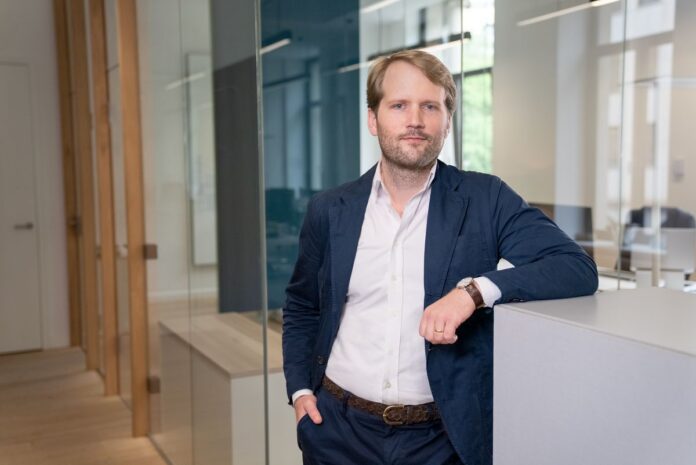
Daniel Ahrendt, previously of ActivumSG, was recently appointed the senior living developer’s CEO after initially joining as interim CFO. He speaks to Investors in Healthcare about German market dynamics, capital flows and how Carestone is positioning itself for the next phase of growth.

Investors in Healthcare: What has driven the more positive sentiment in Germany’s care market over the past year?

Daniel Ahrendt: The stabilisation we are seeing is primarily on the operator side. Over the last couple of years, operators were under significant pressure from inflation, rising labour costs, staff shortages and regulatory constraints. That led to a number of insolvencies, which understandably weighed heavily on investor sentiment.

What has changed is that the operators that remain have largely done their homework. They have renegotiated cost structures with insurers and authorities, and those adjustments are now being realised. As a result, margins have stabilised.

We are now seeing some operators targeting growth. That shift is critical because, in what is fundamentally a single-tenant asset class, you need confidence in the operator to underwrite real estate. That confidence is beginning to return.

IIH: How do you assess the current supply-demand balance?

DA: The structural imbalance has not changed. In fact, it is worsening. Demand is structurally underpinned by an ageing population, and that is completely independent of the current market cycle.

Estimates suggest Germany will need roughly 400,000 additional care beds over the next 20 years. Put simply, that equates to building one new nursing home every working day over that period. We are nowhere near that level of delivery.

On the supply side, development has slowed dramatically. The economics are very challenging: construction costs have risen, financing costs have increased, and rents – particularly in the regulated nursing segment – have not kept pace. That makes it difficult to achieve viable yields.

So, while demand continues to grow, supply remains constrained. The gap is widening.

IIH: Where is capital focusing within senior living today?

DA: There is a clear divergence between segments.

The more regulated nursing care segment remains difficult for institutional capital because of the constraints around rents and operating structures. By contrast, less regulated formats, such as assisted living, are attracting more attention.

However, assisted living models are complex. Nursing care is fundamentally needs-driven but assisted living and similar concepts are demand-driven. That means you need the right product, in the right location and the right price to attract residents. Not every concept works, and the market in Germany is still developing in that respect.

For us, that means being selective. There is opportunity, but it requires a proven concept and careful execution.

IIH: Institutional capital has been relatively absent. Is that changing?

DA: Not materially. We have seen some activity driven by motivated sellers, but that is not the same as a broad-based return of institutional capital.

Transactions still go through, but it is largely limited to smaller portfolios or individual assets. Pricing has adjusted, but volumes remain subdued, and the buyer universe is relatively narrow.

Part of the challenge is scale. The German market is highly fragmented. Individual assets are relatively small, and even portfolios of two or three assets may only represent €20m. That is often below the threshold for larger international investors, particularly those without a local platform. Our ambition is to partner with institutional investors looking to access the German market using a reliable local partner with a proven track record.

IIH: What needs to change to interest institutional capital?

DA: The key issue is the misalignment between costs and rents.

Rents in the nursing segment are regulated and have been relatively “sticky,” while construction and financing costs have increased significantly. This dynamic compresses returns and makes new development difficult to justify.

There are limits to how far rents can rise because affordability is a real concern. On top of that, the regulatory environment is complex. You have federal and state-level frameworks, staffing requirements and different calculation methodologies across regions. That complexity can deter capital.

Ultimately, for institutional investors to return at scale, you need a more balanced framework. One that allows for viable development while remaining affordable for residents. That is why we are fortunate to have our retail distribution platform.

IIH: How is Carestone adapting its strategy in this environment?

DA: Our core advantage remains our retail distribution platform. It allows us to sell assets at tighter yields than institutional capital typically requires, which in turn enables us to continue developing in a challenging market. We completed more than €500m in sales by gross development value between 2023 and 2025.

We are also increasingly providing liquidity to third parties: selling assets on behalf of other developers or investors who may not have access to our distribution channel.

At the same time, we are evolving the product mix. While we remain committed to the nursing segment, we are placing more emphasis on residential-style formats and less regulated concepts where appropriate.

Another important channel for us is redeveloping existing assets These are generally easier to underwrite since you have visibility on operations, occupancy, staffing and demand. That reduces development risk compared to ground-up new builds, particularly in the current environment.

IIH: Does that create opportunities for different types of capital?

DA: Yes, particularly for value-add or core-plus capital.

Existing assets, especially those that may require repositioning or operational improvement, can offer attractive entry points at current pricing levels. Combined with relatively strong yields compared to other real estate sectors, that creates a compelling proposition. That is where we see a huge opportunity for Carestone.

To pursue those opportunities at scale, we are looking to broaden our capital base. Our existing pipeline is substantial, but expanding into acquisitions requires additional capital partnerships that we are actively exploring.

IIH: How do you see the market evolving over the next three to five years?

DA: We expect a gradual shift in the care model.

Traditional, highly regulated nursing care will remain essential, but we are likely to see a broader mix of formats, including more outpatient and ambulatory care concepts. These can be more flexible and, in some cases, more efficient to deliver.

We are also seeing hybrid models that combine nursing care, assisted living, daycare and residential elements within a single development. These “campus-style” approaches can provide a continuum of care while improving overall economics.

IIH: Will scale become more important, both for assets and operators?

DA: On the operator side, yes. There is clearly a drive towards consolidation.

Many smaller, family-run operators face succession challenges, and that is creating opportunities for larger players to acquire both operations and real estate. Private equity-backed and listed operators are actively pursuing growth, often through acquisitions rather than purely organic expansion.

For assets, there are limits. Regulatory frameworks often cap the size of individual nursing homes, for example, around 80 beds in some regions. But scale can be achieved at the site level by combining different care formats and residential elements.

IIH: Where do you see Carestone in that landscape?

DA: Over the past few years, the focus has been on navigating a difficult market environment but we have maintained activity through both our retail distribution platform and redeveloping standing assets That has given us a solid base and stability. But, as the market improves, we expect to shift back towards offensive growth. That includes expanding our pipeline, continuing to increase activity in existing assets and bringing in additional capital partners.

The fundamentals of the sector remain very strong. The challenge has been the framework in which we operate. As that begins to normalise, we see significant opportunity to scale again.

Nick Herbert
Nick Herbert
Nick Herbert has over 30 years’ experience in the financial markets, as both a practitioner and journalist. He started work as an investment banker in London, before joining International Financing Review (IFR) to report on debt capital markets and derivatives. He moved to Singapore in 2000 to manage IFR’s financial markets editorial team throughout Asia, before returning to London in 2009 to take up the position of Publisher for Reuters Capital Markets Publications. For the last five years he has been covering global capital markets, ESG finance and healthcare markets on a freelance basis.
Related Articles
More From Author

Advertisement

Related Resources

Related Events