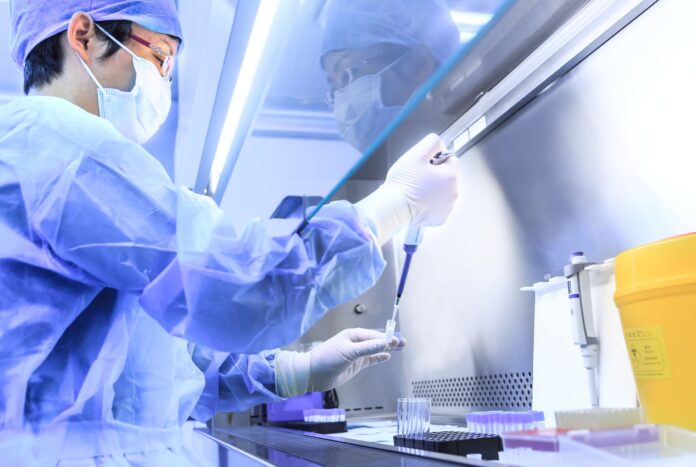
China is no longer simply a low-cost engine for biotech development but an increasingly important source of innovation. For European companies and investors, that creates an opportunity to participate in the next stage of Chinese biotech’s globalisation. The challenge is working out how to capture the value.
A recent roundtable on China’s biotech ecosystem held by global law firm McDermott Will & Schulte, which brought together voices from across the biotech and investment landscape, highlighted the growing sophistication of the country’s pharmaceutical sector and the opportunities for international partnerships.
The discussion points to a broader shift: the question is no longer whether China matters to global biotech, but how companies should engage with it.
Structural trend
China’s biotech growth is a long-term structural trend rather than a cyclical phenomenon. Government support, scientific talent, research infrastructure and a highly competitive innovation culture have helped create an ecosystem with significant advantages in development, clinical research and commercialisation.
But perhaps the most important change is that China’s competitive advantage is increasingly about execution rather than cost savings.
The McDermott discussion highlighted faster decision-making, strong engineering and execution capabilities, AI-enabled R&D and, in some settings, significantly lower development costs. Participants suggested that China can generate early clinical data in a fraction of the time and cost required in Europe.
At the same time, confidence in the quality of Chinese science is growing. Chinese companies are increasingly developing differentiated assets rather than following global trends, supported by academic research, biotech companies, AI-enabled drug discovery and advanced infrastructure.
For Europe, the opportunity is broader than licensing Chinese drugs for European markets.
Chinese companies are increasingly looking for global commercialisation capabilities, international regulatory expertise, access to Western capital markets and international partnerships.

As Emmanuelle Trombe, partner at McDermott, puts it, some Chinese pharmaceutical companies value Europe as a source of development in its own right.
“They consider that Europe has not just a commercial value, but also has value in terms of clinical development,” she said.
If Chinese companies need European clinical expertise, regulatory knowledge and access to patients as they build global programmes, Europe can become part of the development infrastructure that turns Chinese innovation into global products, not just a route to market.
Deal structures are evolving accordingly.
From licensing to shared ownership
Western pharmaceutical companies have typically licensed an asset from a Chinese developer, paying upfront in return for rights outside China.
Increasingly, however, the parties are looking for ways to share more of the eventual value.
One example is the NewCo model, in which an asset is transferred into a newly established company that raises capital internationally to fund development. The Chinese owner can retain an equity stake, while Western investors provide capital and expertise.

McDermott partner, Anthony Paronneau, says China is increasingly interested in retaining those rights.
“We are seeing more appetite to keep equity in NewCo and capture a greater size of the economic upside,” he says.
That changes the relationship to one in which the Chinese innovator and its Western partners have a common interest in maximising the global value of the asset. Chinese companies are becoming more global in their outlook.
Paronneau points to deals involving US co-promotion rights, in which Chinese companies share development costs and put their own commercial resources on the ground.
Geopolitics – an opening for Europe
But there is a problem for China’s global ambitions: geopolitics.
Washington’s increasingly restrictive approach towards Chinese technology creates uncertainty for companies seeking to move Chinese innovation into Western markets.
Changing the corporate structure can help, but it does not eliminate the underlying political risk.
“The NewCo model helps mitigate the geopolitical threat,” Trombe says. “But it doesn’t solve the issue.”
That may create an opening for Europe. Europe is not immune to geopolitical considerations, but its regulatory and political environment is different.
“We see a way for Europe to potentially become more relevant in Chinese initiatives than the US,” Trombe says. “We don’t have the same constraints.”
That could manifest in a potential opportunity for Chinese biotech companies and European partners, combining Chinese innovation and development speed with European commercialisation expertise and market access.
A capital proposition
Europe also has a substantial pool of investment capital looking for opportunities in healthcare, which could help finance Chinese innovation as it moves into global development.
Rather than asking whether Europe should “invest in China”, a more useful question might be whether they should invest alongside Chinese innovators in assets designed for global development.
That brings the focus back to the quality of the science, the strength of the IP, the clinical opportunity, the regulatory pathway and the potential size of the global market.
China can bring considerable advantages to the table. Its clinical capabilities and patient recruitment can accelerate development, but its biotech industry still depends heavily on international markets for sustainable returns.
That dependence strengthens the case for global partnerships.
European bridge
The US-China relationship may make the traditional route from Chinese innovation to Western markets more difficult, but Europe, with its sophisticated healthcare markets, clinical capabilities and pools of investment capital, could become a more important partner.
The right deal structures are required, however, to enable meaningful exposure to the value those assets can create globally.
The NewCo model is one route. Equity investment, co-development and co-commercialisation are others.
For European companies and investors, the opportunity is not simply to become a bridge between China and the West. It is to own part of what crosses it.